Marine Firesleeve: Understanding Workboat Code Edition 3 and Fire Protection Requirements for Flexible Hoses
A technical guide
to the use of silicone-coated glass fibre firesleeve
for marine applications
Introduction
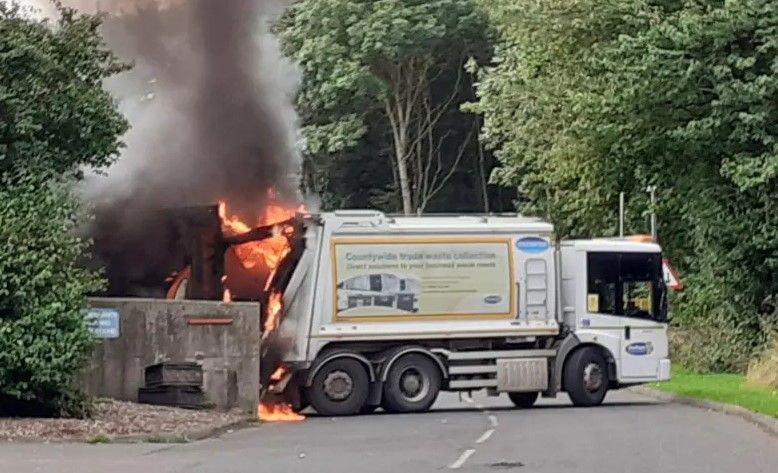
Fire protection is an important consideration when designing, installing and maintaining flexible hose assemblies on workboats and other marine vessels. Fuel lines, hydraulic systems and associated pipework may be exposed to elevated temperatures, direct flame and other potential sources of heat. Selecting suitable hose assemblies and providing appropriate protection can therefore play an important part in reducing fire risk.
For vessel builders, hose manufacturers, marine engineers and equipment designers, an important question is whether a flexible hose must itself be fire-resistant, or whether it can achieve the required level of protection through the use of an external protective covering.
The Maritime and Coastguard Agency's (MCA) Workboat Code Edition 3 provides a particularly relevant reference point. Section 8.11 addresses fuel pipes and includes an explicit provision for flexible fuel pipes to be protected from fire.
This creates a relevant application for externally applied firesleeves, such as those manufactured by Pyroglass Ltd.
This guide explains the relevant Code provisions, the associated marine standards and how silicone-coated glass fibre firesleeve can form part of a suitably assessed and tested hose assembly.
1. What does Workboat Code Edition 3 say about flexible fuel pipes?
Section 8.11 of Workboat Code Edition 3 covers fuel pipes and their associated requirements.
Clause 8.11.3 recognises that short lengths of flexible fuel pipe may be necessary where movement or vibration needs to be accommodated between fixed fuel pipes and fuel tanks or consumers.
The important fire protection requirement is found in clause 8.11.3.1, which states that flexible fuel pipes shall be:
- Fire resistant;
- Metal reinforced; or
- Protected from fire
The Code also refers to the applicable standards identified in MIN 698 (Workboat Code Edition 3 – standards and guidelines for best practice).
The wording is important as it recognises more than one means of providing the required protection. A flexible hose may be inherently fire-resistant, may incorporate metal reinforcement, or may be protected externally from fire with products such as firesleeve.
The remaining requirements of clause 8.11.3 must also be considered. In particular, the flexible fuel pipe must be suitable for carrying the fuel concerned, connections must be properly secured to prevent slippage and leakage, and the hose must be renewed in accordance with the manufacturer's instructions.
A protective sleeve does not replace these requirements.
It is an additional protective component forming part of the overall hose installation.
2. Does the firesleeve itself need to meet a specific marine standard?
An important distinction needs to be made between the protective covering and the completed hose assembly.
Workboat Code Edition 3 does not identify a separate, stand-alone firesleeve approval standard for the external covering referred to in clause 8.11.3.1.
Instead, the requirement is directed at the flexible fuel pipe
Where a firesleeve is selected as the means of protection of a hose, the relevant question is whether the completed hose assembly, incorporating that protective covering, provides the required fire protection.
This is an important consideration for hose manufacturers and marine equipment suppliers.
The firesleeve manufacturer supplies:
- the protective component (firesleeve)
- and its supporting technical information.
The hose assembly manufacturer is normally responsible for:
- selecting the appropriate hose fittings and protective covering
- and for establishing that the completed assembly is suitable for its intended application.
Where fire-resistance testing is required, it is the complete assembly and its specified configuration that should be assessed, rather than assuming that a test result for the fire sleeve alone establishes the fire resistance of the hose assembly.
A recognised Certifying Authority (CA) should be consulted by the hose assembly manufacturer to confirm the appropriate evidence and acceptance route for the particular vessel and installation.
Who should be consulted for marine hose assembly acceptance?
For UK-registered workboats, the relevant Certifying Authority will normally be an organisation authorised by the Maritime and Coastguard Agency (MCA) who survey and certify small commercial vessels under the applicable Code.
Examples include Bureau Veritas, DNV, the International Institute of Marine Surveying (IIMS), Lloyd's Register, MECAL and the Society of Consulting Marine Engineers and Ship Surveyors (SCMS). Full Certifying Authorities list can be found here:
For countries local to the UK, such as Gibraltar-registered commercial vessels, the Gibraltar Maritime Administration (GMA) is the relevant flag-state authority. It authorises a number of Recognised Organisations and Certifying Authorities to undertake survey and certification work on its behalf, including IIMS, MECAL, SCMS and YDSA.
The appropriate authority will depend on the vessel's flag, size, type of operation and applicable certification requirements.
Where an external firesleeve is used to protect a flexible hose assembly, the hose manufacturer should establish the suitability of the completed assembly and agree the appropriate supporting test evidence and acceptance route with the relevant Certifying Authority.
This is particularly relevant when considering ISO 15540:2016, which provides a fire-resistance test method for non-metallic hose assemblies and includes provision for testing assemblies with fire sleeves fitted.
3. Which marine standards are relevant?
The Maritime and Coastguard Agency's (MCA's) MIN 698 Amendment 2 (M) supplements Workboat Code Edition 3 by identifying standards and guidance relevant to the Code.
For clause 8.11.3.1, the standards listed include:
- BS EN ISO 10088 – Permanently installed fuel systems for small craft.
- BS EN ISO 7840:2021 – Small craft fire-resistant fuel hoses.
- BS ISO 15540:2016 – Ships and marine technology – Fire resistance of non-metallic hose assemblies and non-metallic compensators – Test methods.
Two of these standards are particularly relevant when considering externally protected flexible hose assemblies.
ISO 7840:2021 – Fire-resistant fuel hoses
ISO 7840 specifies requirements for fire-resistant fuel hoses used in permanently installed fuel systems on small craft.
It is relevant when a hose manufacturer is selecting or specifying a hose that is intended to provide fire resistance through its own construction.
It is important to distinguish this from the use of an external protective covering.
A firesleeve is not itself a fuel hose and should not be represented as complying with ISO 7840 simply because it is used around a hose.
The hose manufacturer must establish the suitability of the hose and completed assembly for the intended fuel service.
ISO 15540:2016 – Fire resistance of non-metallic hose assemblies
ISO 15540 is particularly interesting in the context of externally applied firesleeve.
It specifies a test procedure for determining the fire resistance of non-metallic hose assemblies and non-metallic compensators.
The purpose is to establish whether the assembly remains leak-tight following the specified period of fire exposure, including when subjected to proof pressure.
Importantly, ISO 15540 provides for test specimens to be prepared with or without fire sleeves, subject to agreement between the relevant parties and the test facility.
Where firesleeves are used, the specimens in the relevant series are tested with the sleeves fitted.
This is a significant point for the marine industry. The standard recognises that an external firesleeve can form part of the configuration being assessed for fire resistance.
It is the performance of the completed assembly under the test conditions that matters.
ISO 15540 is a test method, not a stand-alone product certification for firesleeve. A successful test of a particular hose assembly does not automatically certify every hose, fitting, diameter or sleeve construction.
The test configuration and the scope of any resulting approval or report must therefore be understood.
4. Pyrosleeve – external fire protection for marine hose assemblies
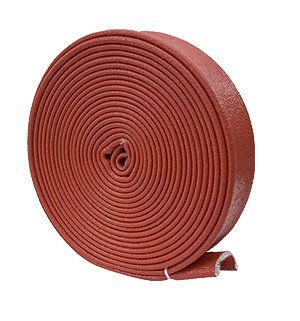
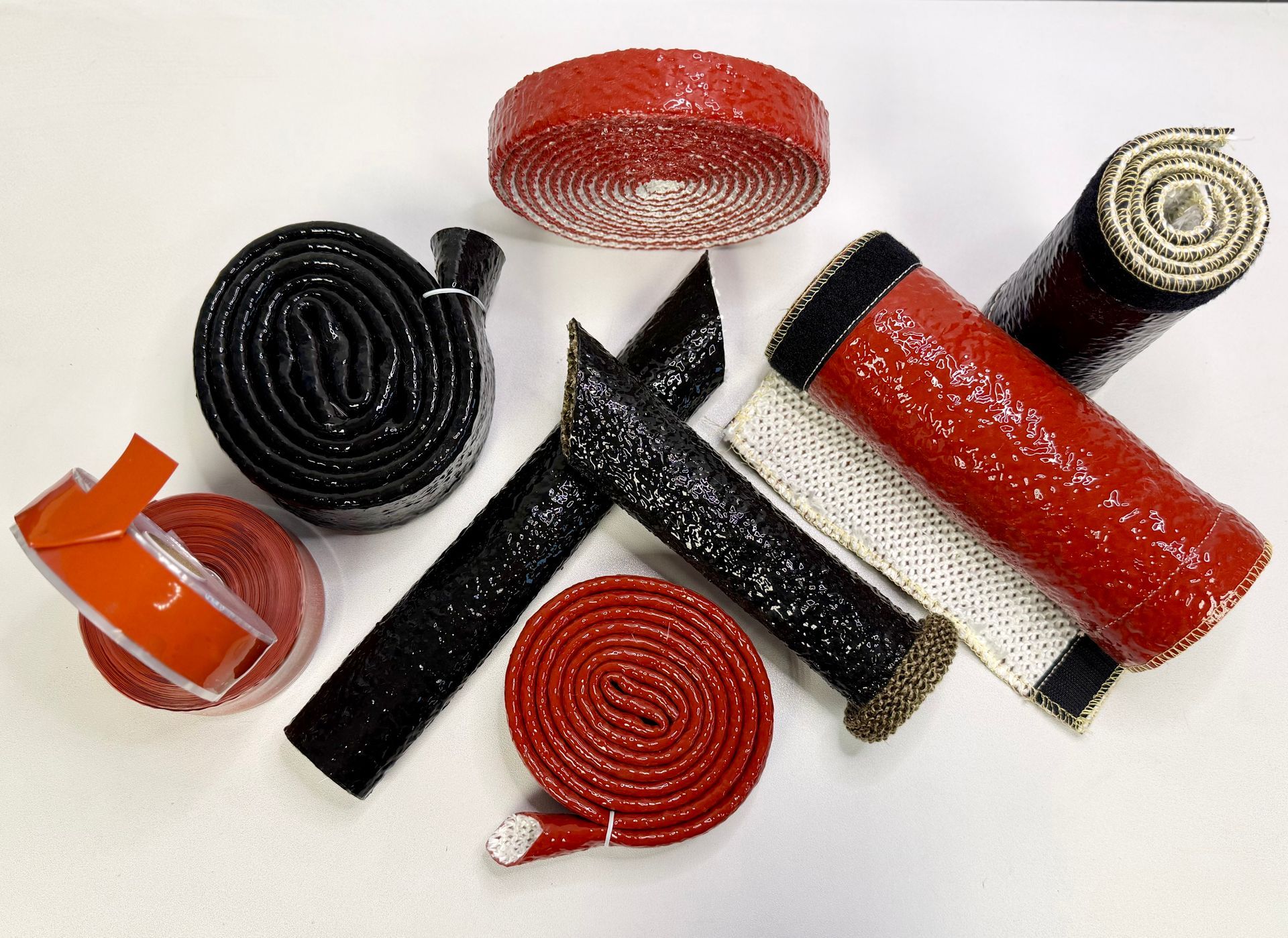
Pyrosleeve is a silicone-coated glass fibre firesleeve manufactured by Pyroglass Ltd in Lancashire, United Kingdom.
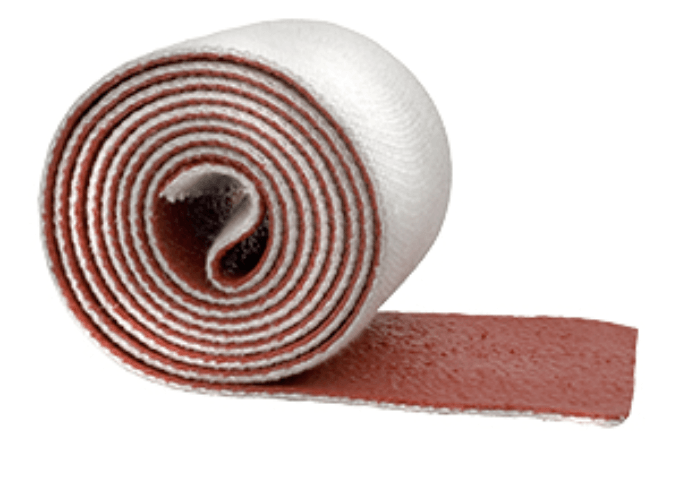
It is manufactured using European texturised E-glass fibre yarns, knitted into a flexible tubular sleeve and coated with a high-grade silicone elastomer.
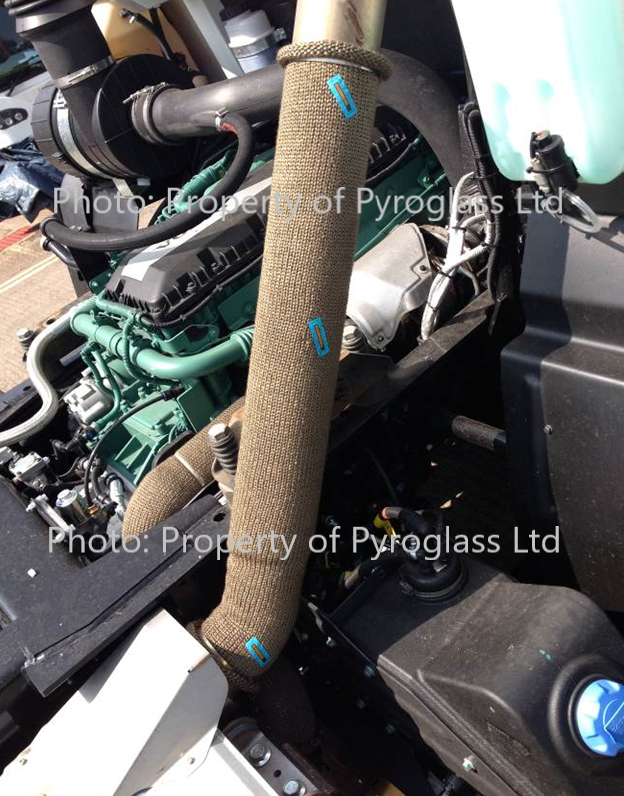
The construction combines the thermal properties of the glass fibre substrate with a protective silicone coating, providing a flexible covering for suitable hoses, pipes, cables and associated components.
Pyrosleeve is designed to provide protection against:
- Radiant heat and elevated operating temperatures;
- Direct flame exposure;
- Abrasion and external mechanical damage;
- Molten metal splash;
- Exposure to oils, hydraulic fluids and fuels, subject to application suitability.
The product has a continuous temperature rating of up to 260°C, with intermittent molten metal splash protection up to 1,200°C.
These figures describe different performance conditions. The molten metal splash figure should not be interpreted as a continuous operating temperature or as a marine fire-test rating.
UL 94 V-0 flammability rating
Pyrosleeve also has a UL 94 V-0 flammability rating for the tested construction.
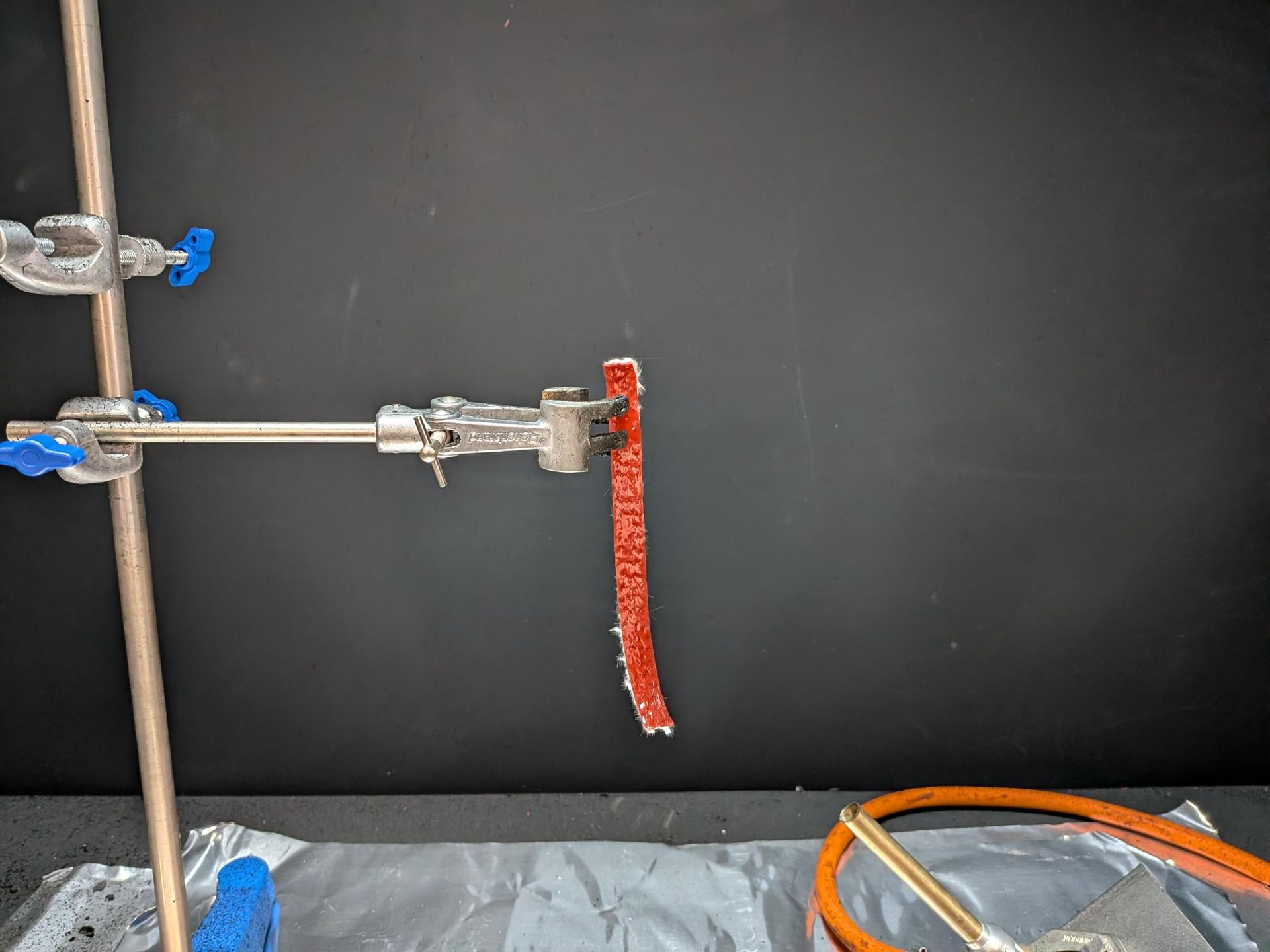
UL 94 is a recognised plastics flammability testing standard. Its V-0 classification is based on a vertical burning test in which the specimen must self-extinguish within specified time limits after the ignition source is removed. The classification also restricts flaming drips that could ignite material below the specimen.
This provides useful supporting evidence of the flammability performance of the tested Pyrosleeve construction.
However, UL 94 V-0 should not be confused with a non-combustibility classification or a marine fire-resistance test. It does not, by itself, establish that a complete hose assembly will remain leak-tight during or following fire exposure.
For this reason, UL 94 V-0 and ISO 15540 address different aspects of performance:
- UL 94 V-0 provides evidence of the tested material's behaviour in a defined flammability test.
- ISO 15540 assesses the fire resistance of a complete non-metallic hose assembly under specified test conditions.
Together, these are useful considerations when evaluating a firesleeve-protected hose assembly, but one does not replace the other.
5. Why test the complete hose assembly?
A firesleeve is an external protective covering. It does not change the underlying construction of the hose, its pressure rating, its fuel compatibility or the suitability of its end connections.
The performance of a completed assembly depends on several factors, including:
- The type and construction of the hose;
- The fluid being carried;
- The operating pressure and temperature;
- The fittings and end connections;
- The firesleeve material and construction;
- The way the sleeve is fitted and secured;
- The installation environment and exposure conditions.
For this reason, it is important that the hose manufacturer considers the complete assembly rather than relying on the properties of an individual protective component.
ISO 15540 provides a recognised route for assessing non-metallic hose assemblies under fire exposure.
Where Pyrosleeve is selected as the external protective covering, the test configuration can include the sleeve fitted to the hose assembly.
The manufacturer, test facility and recognised Certifying Authority (CA) should agree the appropriate specimen configuration and the scope of the testing required.
This helps ensure that the evidence relates to the actual assembly being supplied and installed.
6. Installation and application considerations
The selection of a suitable firesleeve should take account of the hose manufacturer's recommendations and the conditions in which the assembly will operate.
Considerations include:
a. Correct sizing: The sleeve must be selected to suit the outside diameter of the hose assembly and any relevant fittings or transitions.
b. Coverage: The required length of protection should be established with the hose manufacturer, taking account of the areas most likely to be exposed to heat or flame.
c. Movement and flexibility: The sleeve should be fitted in a way that does not restrict the movement or flexibility required by the hose assembly.
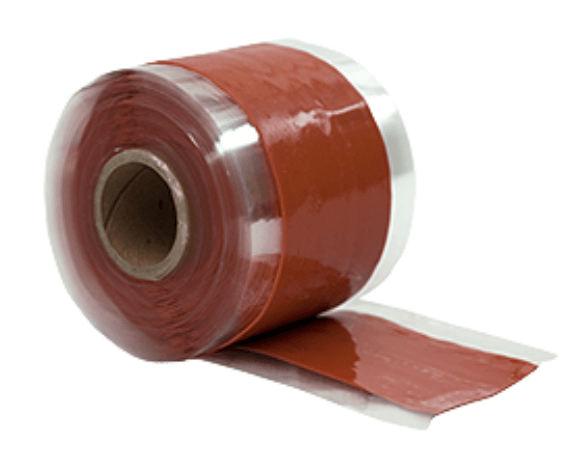
d. Retention: The method of securing the sleeve should be suitable for the application and should not damage the hose or compromise the assembly – our rubber self-fusing tapes are specifically designed to secure our Firesleeves in place.
e. Inspection and maintenance: The completed assembly should be inspected in accordance with the hose manufacturer's maintenance instructions and the vessel's inspection regime.
f. Fluid compatibility: The underlying hose and its fittings must remain suitable for the fluid being carried. External protection does not replace the need for fuel-compatible hose materials and secure connections.
7. Where does Pyrosleeve fit within Workboat Code Edition 3?
The most direct application identified in this guide is clause 8.11.3.1, which allows flexible fuel pipes to be protected from fire as an alternative to relying solely on an inherently fire-resistant or metal-reinforced hose construction.
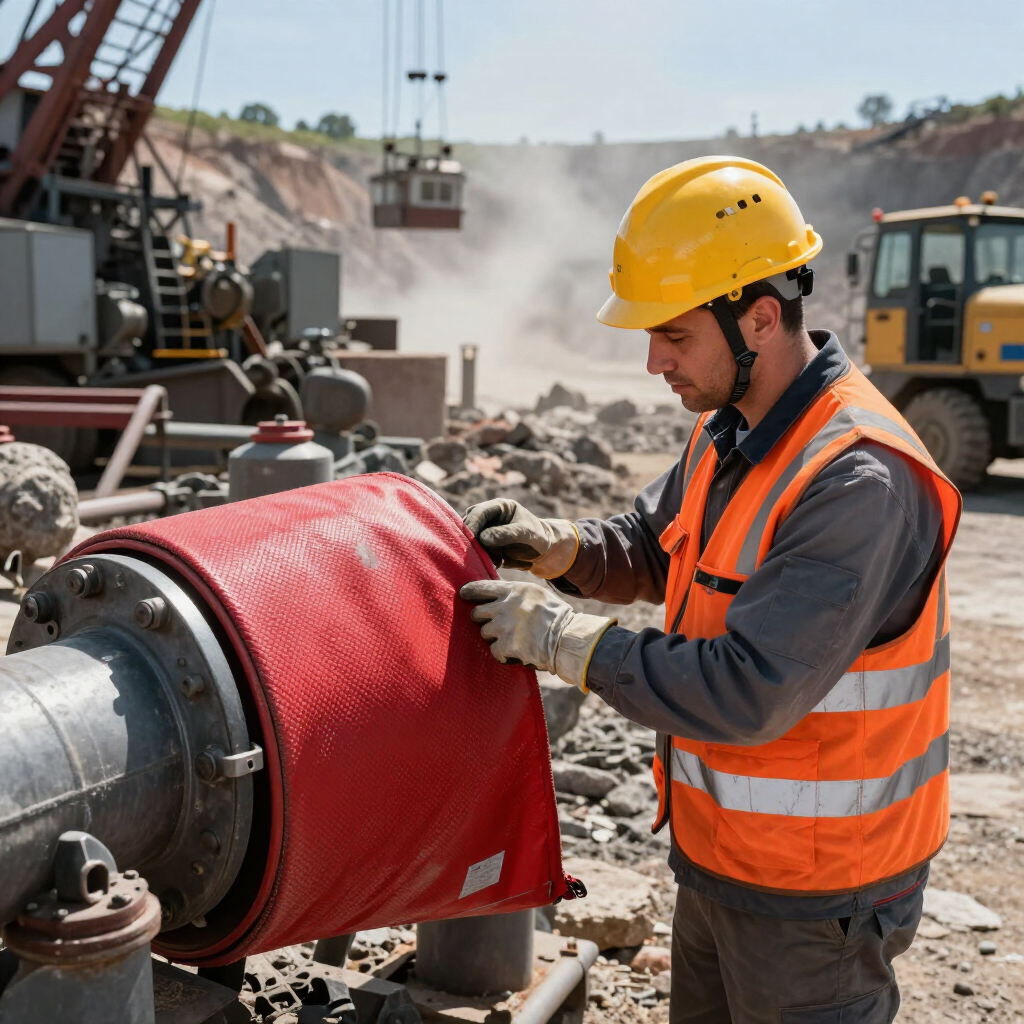
Pyrosleeve is relevant as an external protective covering for suitable flexible hose assemblies.
For hose manufacturers, this provides an opportunity to consider a firesleeve-protected configuration when designing and specifying assemblies for marine applications.
For vessel builders and marine engineers, it provides a practical option to discuss with their hose assembly supplier when additional external fire protection is required.
The important point is that the completed assembly must be suitable for its intended use and supported by the appropriate technical evidence. The selection of Pyrosleeve does not, on its own, establish compliance with the Workboat Code.
8. Frequently asked questions
Does Workboat Code Edition 3 require every flexible fuel hose to be inherently fire-resistant?
No. Clause 8.11.3.1 recognises three approaches: a fire-resistant hose, metal reinforcement, or protection from fire.
Can an external firesleeve be used to protect a flexible fuel hose?
The Code's wording includes the option of protecting the flexible fuel pipe from fire. ISO 15540 also provides for non-metallic hose assemblies to be tested with fire sleeves fitted. The particular assembly and application must be assessed and accepted through the appropriate route.
Does Pyrosleeve need its own ISO 15540 approval?
ISO 15540 is a test method for non-metallic hose assemblies and compensators, not a standalone firesleeve product certification. Where Pyrosleeve is used, the relevant assessment is of the complete hose assembly incorporating the sleeve.
Who is responsible for demonstrating that the hose assembly meets the requirements?
The hose assembly manufacturer is normally responsible for specifying and demonstrating the suitability of the completed assembly, including its protective covering, for the intended application. The vessel's Certifying Authority (CA) should confirm the evidence required for acceptance.
Does UL 94 V-0 mean Pyrosleeve is non-combustible?
No. UL 94 V-0 demonstrates that the tested construction meets defined vertical-burning and self-extinguishing criteria. It is not the same as a non-combustibility classification or a marine hose fire-resistance test.
Does Pyrosleeve have to withstand 1,200°C continuously?
No. The 1,200°C figure relates to intermittent molten metal splash protection. Pyrosleeve's stated continuous temperature rating is up to 260°C. Neither figure should be treated as a substitute for a marine fire-resistance test.
Conclusion
Workboat Code Edition 3 recognises that flexible fuel pipes may be protected from fire through an external protective arrangement. This is an important distinction for the marine industry and provides a relevant application for silicone-coated glass fibre firesleeve.
Pyrosleeve offers a flexible, British-manufactured protective covering, with a silicone-coated E-glass construction, a UL 94 V-0 flammability rating for the tested construction and established thermal and external protection properties.
Where it is selected as part of a marine hose assembly, the appropriate route is to assess the complete assembly, with Pyrosleeve fitted, against the relevant requirements and test methods. ISO 15540:2016 specifically provides for test configurations incorporating fire sleeves.
For hose manufacturers, vessel builders and marine engineers, Pyrosleeve is therefore a product worth considering when specifying external fire protection for suitable flexible hose assemblies.
Pyrosleeve – British-manufactured firesleeve for high-temperature protection, since 1987.
Technical references
- Maritime and Coastguard Agency – The Workboat Code Edition 3, particularly clauses 8.11.1 and 8.11.3.1.
- Maritime and Coastguard Agency – MIN 698 Amendment 2 (M): Workboat Code Edition 3 – Standards and Guidelines for Best Practice, published 10 June 2026.
- BS EN ISO 7840:2021 – Small craft – Fire-resistant fuel hoses.
- BS ISO 15540:2016 – Ships and marine technology – Fire resistance of non-metallic hose assemblies and non-metallic compensators – Test methods.
- UL – Combustion (Fire) Tests for Plastics, including UL 94 vertical-burning classifications.
Technical note: This guide is intended to explain the relevance of the cited requirements and standards. It is not a declaration of MCA approval, Workboat Code approval or ISO 15540 certification for Pyrosleeve. Acceptance of a particular hose assembly remains dependent on its design, testing, intended application and the requirements of the relevant Certifying Authority.